
How Mesquite Grubbing Restores Native Grasses on Central Texas Rangeland
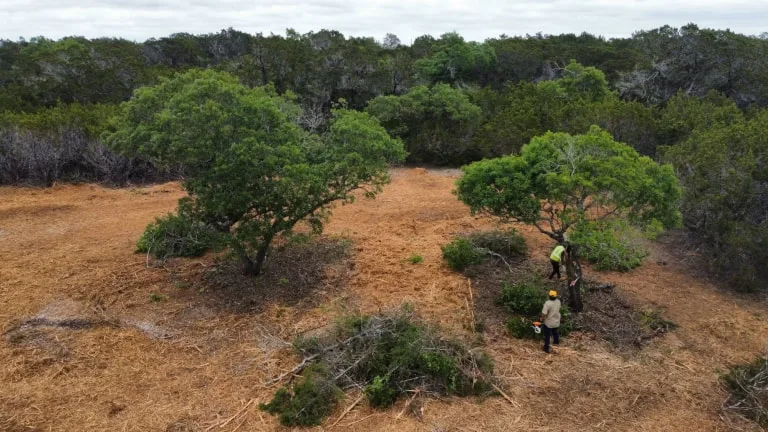
Mesquite has a complicated reputation in Texas. It's tough, it's iconic, and in small numbers it's just part of the landscape. But on rangeland where it's been left unmanaged for years, mesquite can spread aggressively and quietly take over ground that used to support real grazing capacity.
Why Mesquite Takes Over
Mesquite is deep-rooted, drought-tolerant, and remarkably good at outcompeting native grasses for water. Once it establishes a foothold, it tends to spread through both seed and root sprouting, and a hillside that had scattered mesquite ten years ago can turn into a dense mesquite flat with almost no usable grass underneath it. Livestock and wildlife both lose out — mesquite thickets shade out the forage species that cattle, deer, and other grazers actually depend on.
Why Mowing or Cutting Alone Doesn't Work
This is the part a lot of landowners find out the hard way: cutting mesquite down doesn't kill it. Because mesquite regrows aggressively from its root system, simply mowing or bulldozing the visible plant often makes the problem worse over the following seasons, with multiple new stems sprouting from the same root crown.
What Grubbing Actually Does
Mesquite grubbing removes the root system itself, not just the above-ground plant, which is what actually stops regrowth. A grubbing operation is done with equipment designed to excavate the root mass while disturbing as little of the surrounding soil as possible — important on rangeland where erosion and topsoil loss are real long-term concerns.
Done correctly, grubbing:
- Removes mesquite at the root, preventing the regrowth cycle
- Minimizes soil disturbance compared to more aggressive excavation methods
- Opens the canopy so sunlight reaches the ground again
- Sets the stage for native grasses to recover on their own or with reseeding
The Payoff for Grazing and Wildlife
Once mesquite pressure is removed, native grasses — the kind cattle and wildlife actually rely on — typically begin recovering within a growing season or two, especially with adequate rainfall. For ranchers, that translates directly into improved carrying capacity. For landowners managing for wildlife, more grass and for cover means better habitat for deer, turkey, and quail.
A Long-Term Investment, Not a One-Time Fix
Mesquite management is rarely a single event — some regrowth and reseeding from adjacent areas is normal, and most ranches benefit from periodic follow-up. But grubbing done right buys years of usable, grass-covered ground instead of a mesquite flat that just keeps expanding.
Looking to reclaim grazing land from mesquite? Cactus Creek Land Clearing's mesquite grubbing service is built to remove the root, not just the brush. Call 830-353-8580 for a free on-site assessment.