
How to Crush Surface Rock Efficiently with Rock Millers
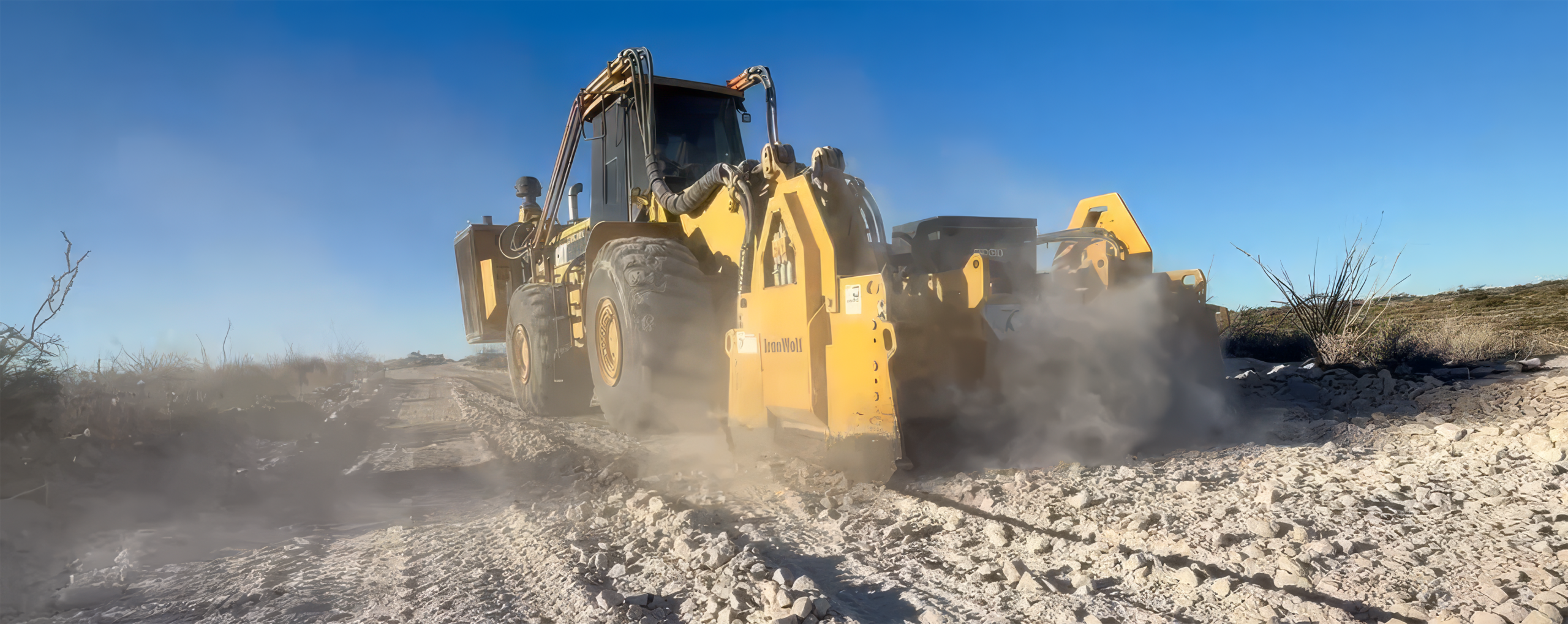
Rock milling is the process of grinding surface rock into usable base material in place, without hauling it off the property. A rotating drum fitted with carbide teeth crushes limestone, caliche, and consolidated rock directly on site. The processed material stays on the ground and becomes compactable base for roads, building pads, and site prep. It’s the most practical solution for ranchers, developers, and landowners dealing with surface rock that’s stopping a project before it starts.
What Is a Rock Miller?
A rock miller grinds consolidated surface rock into the native soil and leaves behind a blended, compactable layer on site. This is different from a traditional crusher, which produces sized aggregate that gets hauled or spread elsewhere. With a rock miller, the rock never leaves the ground it came from.
How the Equipment Works
The milling head is a rotating drum with carbide-tipped steel teeth that spin at high speed across the rock surface. The drum cuts into consolidated material, shattering it into particles approximately one inch and smaller. Those particles mix back into the surrounding soil as the machine passes, creating a processed layer ready to grade and compact. The Cactus Creek IronWolf RRS-01 cuts up to 12 inches deep in a single pass across an 8- or 10-foot working width.
Types of Rock Milling Attachments
Large-format attachments mount on wheel loaders or track dozers and handle commercial, ranch, and large acreage work. Compact attachments mount on skid steers and suit smaller lots and tight-access sites. Both process rock in place. The right choice depends on acreage, rock density, and what the ground needs to support when the work is done.
Why Crush Rock Instead of Removing It
Traditional rock removal costs money twice. Excavation runs $15–$25 per cubic yard. Hauling adds $10–$20 more. Then imported base material to replace what was removed costs another $20–$30 per cubic yard. Rock milling eliminates all three costs. The material processed on site becomes the base.
Time savings are just as significant. A professional crew can mill 1 to 3 acres per day. A five-acre building pad can typically be completed in a single workday. The same job using excavation, haul trucks, and imported aggregate takes multiple days and requires coordinating across trades.
Milling is also easier on the land. The crushed material blends with native soil and stays on site, improving surface stability and reducing erosion. There’s no stripped topsoil, no hauled-in aggregate, and no disruption to native soil structure.
The Rock Milling Process, Step by Step
- Site Assessment and Rock Density Survey: The crew evaluates rock type, depth, terrain, and access to determine equipment fit and number of passes needed.
- Clearing Surface Debris and Vegetation: Brush and loose material are removed before the milling head engages to protect the machine and keep the pass clean.
- First-pass Milling to Break Up Large Rock: The milling head cuts to depth, fracturing consolidated material across the work area.
- Fine-pass Grading for Surface Consistency: A second pass blends the crushed rock with native soil and levels the surface to a consistent grade.
- Final Grading and Compaction: For road, pad, or driveway use, the milled surface is graded to slope and compacted with a vibratory roller, producing a stable, drive-ready surface without a single truck leaving the property loaded.
What Rock Milling Is Best For
Ranch Roads and Pasture Prep: Rocky ground that would damage equipment and make road maintenance constant becomes a milled, graded surface that holds up under regular traffic without imported base material.
Building Pad and Site Prep: Limestone slabs and caliche at or near the surface are the most common obstacles on Hill Country lots. Milling processes them in place and leaves a compactable base ready for the next construction phase.
Oil and Gas Access Roads: Remote lease roads across rocky terrain benefit from milled surfaces that stay passable and reduce vehicle wear without ongoing gravel maintenance.
Agricultural Field Prep: Rocky pasture too rough to plow or seed can be milled to a workable surface that supports cultivation, overseeding, or improved grazing.
Rock Milling vs. Traditional Rock Removal
| Factor | Rock Milling | Traditional Removal |
| Cost | Lower — no haul or import | $45–$75+ per cubic yard all-in |
| Equipment needed | One machine | Excavator, trucks, loader, grader |
| Hauling required | No | Yes |
| Timeline | 1–3 acres/day | Multiple days per trade |
| Soil impact | Low | High |
| Best use case | Roads, pads, ag prep | Deep grading, major construction |
Factors That Affect Rock Milling Efficiency
- Rock Type and Hardness: Limestone and caliche process faster than harder formation rock. Dense stone slows the drum and increases tooth wear, which affects pace and cost.
- Terrain and Access: Flat, open ground is the most efficient scenario. Steep grades and tight access slow the operation and may require equipment changes.
- Acreage and Rock Density: Larger, consistent projects are more efficient per acre than small, scattered jobs. High-density rock with little soil coverage takes more passes to reach depth.
- Equipment Horsepower and Attachment Type: A wheel loader mount like the RRS-01 processes rock faster and deeper than a skid steer attachment. Matching machine to job scale is the most important efficiency decision on any milling project.
Cost and Timeline
Rock milling in Texas typically runs $2,000 to $5,000 per acre depending on rock hardness, density, terrain, and required depth. Harder rock, steep slopes, and limited access push costs toward the higher end. Flat, accessible sites with soft to medium limestone fall toward the lower end.
A crew can process 1 to 3 acres per day under typical Hill Country conditions. A five-acre pad on accessible ground is commonly finished in a single day. An on-site assessment gives the clearest picture of both cost and schedule before work begins.
Frequently Asked Questions
Can any rock be milled, or only certain types? Rock milling works best on consolidated material like limestone, caliche, and soft sandstone common across Central and West Texas. Very hard formation rock may require multiple passes or alternative methods. A site assessment identifies what the machine can handle before the project starts.
Does rock milling leave the ground usable immediately? Yes, for most applications. After grading and compaction, a milled surface is immediately suitable for driving, building, or ranch use. Agricultural uses requiring tillage may need one additional step to work the milled material into the seed bed.
Is rock milling cheaper than hauling rock off-site? In most cases, significantly so. Hauling requires excavation, loading, trucking, disposal, and imported base material to replace what left. Milling eliminates every one of those costs. The larger the project, the more that difference compounds.
How deep can a rock miller crush? The Cactus Creek IronWolf RRS-01 cuts up to 12 inches deep in a single pass. Most surface rock problems in the Hill Country and Central Texas fall within that range.
Request a Rock Milling Estimate With Cactus Creek Land Clearing
If surface rock is standing between your property and what you want to do with it, Cactus Creek Land Clearing can help. We serve the Texas Hill Country, Central Texas, and surrounding areas with professional rock milling services using the IronWolf RRS-01.
Call today to schedule a free site assessment. We’ll look at the rock, assess the terrain, and give you a straight answer on what the job involves and what it will cost.